
Iron Infusions vs. Iron Supplements: Which Is Right for You?
You’re exhausted.
You can’t focus.
Your workouts feel harder than they should.
You finally get labs done.
And you’re told:
“Your iron is a little low. Just take a supplement.”
But here’s the part no one explains:
Iron deficiency exists on a spectrum — and you don’t need to be anemic to feel awful.
If your ferritin is below 50 ng/mL, you can absolutely experience:
Fatigue
Brain fog
Hair shedding
Poor exercise tolerance
Shortness of breath
Mood changes
Even if your hemoglobin looks “normal.”
And when that happens, simply handing someone iron pills isn’t always the best strategy.
Let’s break this down.
Option 1: Oral Iron Supplements
Iron pills are usually the first recommendation — and for mild deficiency, they can work.
But there are a few things most people don’t realize:
1. Absorption is limited.
Your gut can only absorb a small amount of iron at a time.
2. Daily dosing isn’t always best.
Research shows every-other-day dosing can improve absorption and reduce side effects because of how your body regulates iron uptake.
3. Side effects are common.
Nausea. Constipation. Metallic taste. Stomach pain.
And because of that?
Many women stop taking it before they’ve actually rebuilt their stores.
Oral iron can be appropriate when:
Ferritin is only mildly low
Symptoms are minimal
You tolerate supplements well
You’re in a maintenance phase
But it’s not the only option.
Option 2: Iron Infusions (IV Iron)
Iron infusions deliver iron directly into the bloodstream.
That means:
No reliance on gut absorption
No digestive side effects
Faster replenishment
Often just one treatment
Many women notice improvement within 1–2 weeks as red blood cell production increases.
And here’s the part that surprises most people:
You do not need to be severely anemic to qualify for IV iron.
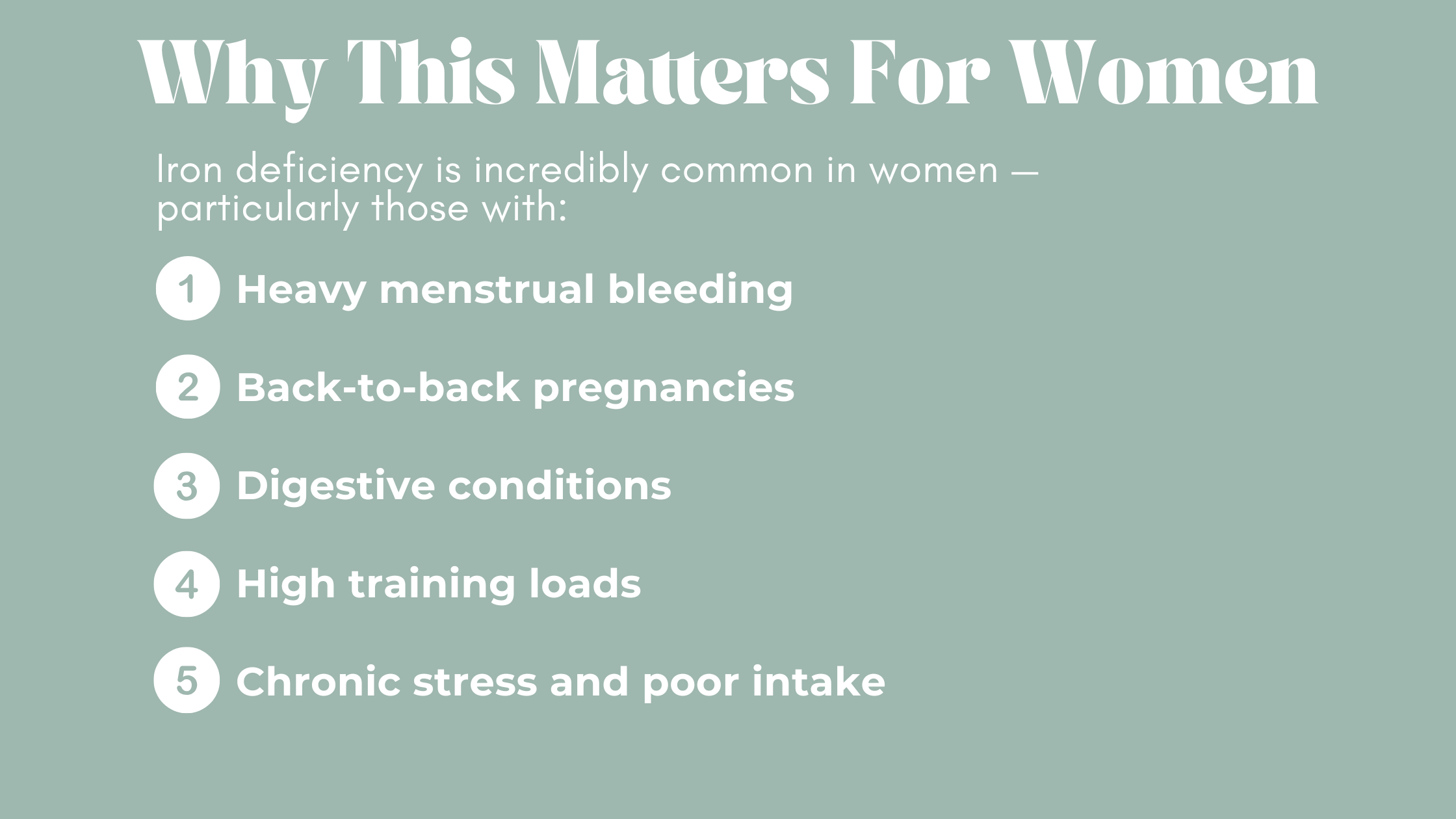
If your ferritin is below 50 and you’re symptomatic — especially with heavy periods, postpartum depletion, or absorption issues — IV iron can be a very reasonable and effective option.
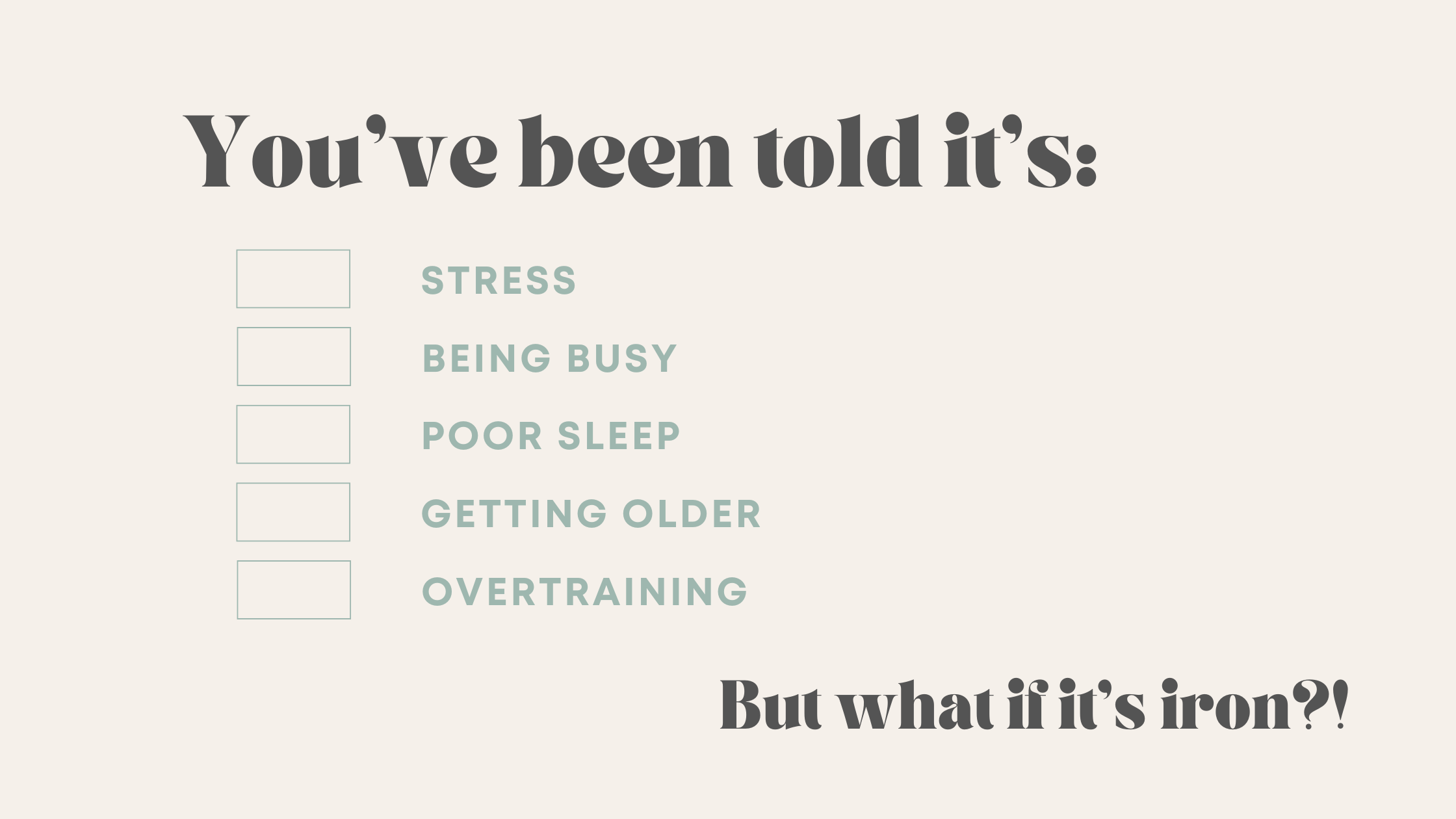
And too often, symptoms get dismissed as:
“It’s just stress.”
“It’s just being busy.”
“It’s just aging.”
“Low iron can look like anxiety. it can look like burnout. it can look like just tired. And it’s work evaluating properly.”
The Bigger Picture: Fix the Root Cause
Replenishing iron is only half the work.
If you’re losing iron faster than you replace it — because of heavy periods or poor absorption — you’ll keep cycling through deficiency.
That’s why proper assessment matters:
Ferritin
Full blood count
Menstrual history
Digestive health
Postpartum history
You deserve more than a bottle of supplements and a “see you in three months.”
So Which Is Better?
There isn’t a one-size-fits-all answer.
Oral iron may be appropriate if:
Deficiency is mild
Symptoms are manageable
You tolerate it well
You’re okay with a slower timeline
IV iron may be appropriate if:
Ferritin is below 50
Symptoms are significant
You can’t tolerate supplements
You want faster results
You have ongoing blood loss
The key is matching the treatment to the severity and your lived experience.
I wrote a much more detailed breakdown — including FAQs about qualification, safety, and timing — over on the Ivy Health Clinic blog.